
Estimated Reading Time: 5 Minutes
In Costa Rica, we use nicknames a lot. The first time I was standing in line at a hardware store in Escazu, the attendant asked me, “¿Y vos macho, en que te puedo servir?” And you, “Macho” (macha is female), what can I do for you? I didn’t realize I was being called blondy. I was far from blond; I used to be brown-haired back then. People would also call me flaco because I was skinny. I didn’t really pay attention, but when I was in another store, the attendant called the woman next to me “Negra” (negro is male) even though she wasn’t black at all.
My Spanish was barely in survival mode, and I didn’t have a clue. This is way before I started selling real estate. At the time, I had a bilingual secretary, Sandra, and I asked her what this was all about. Before you know it, you will end up with a nickname in Costa Rica, called an “apodo”, so start learning about the customs of your new home country. Escazu, where I live, is famous for those nicknames; almost every local has one.
Macho
The word “macho” in Spanish is a tough or masculine guy. It is also used for a blond or light-haired person. Macha is the word for a woman or girl.
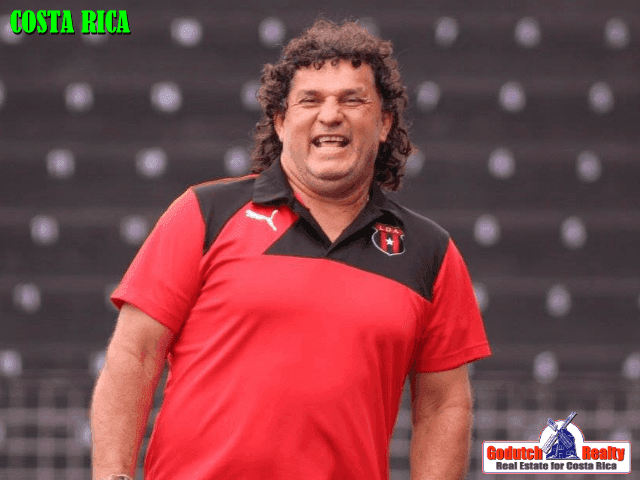
I can assure you it is not meant as a nasty name; it is just like pal, sista, bro, dude, or buddy. In the photo, you see the well-known soccer coach “Macho” Ramirez. He has light brown hair (now more gray), which is uncommon among Ticos, hence the use of these nicknames.

Negro/Negra
The word “Negro” means black in Spanish, but it doesn’t mean that the person being called “Negro” or “Negra” is a black person or African American. Those being called Negro (male) or Negra (female) have black hair or have darker skin than the person who uses the word.
Other Nicknames
- Mae – Not really a nickname, but a very common way to refer to a friend (“dude,” “mate”).
- Gordo / Gorda – “Fatty” – often used affectionately regardless of size.
- Flaco / Flaca – “Skinny” – common affectionate nickname.
- Negro / Negra – Often used affectionately to refer to someone with dark hair or complexion.
- Chino – Someone with curly hair or slanted eyes; not necessarily of Asian descent.
- Tico / Tica – Nicknames for Costa Ricans.
- Mopri – Slang for a close friend (from “primo” backward).
- Compa – Buddy, pal, friend.
- Loco / Loca – Crazy one; often used affectionately among friends.
- Pato – Can refer to someone who is clumsy or funny.
- Pulga – “Flea” – for a small person.
- Pelo – Someone known for their hair.
- Coco – Common nickname for someone with a round head.
- Chiqui – a small person or the youngest family member.
- Viejo / Vieja – Used affectionately for a spouse or long-time friend.

Shortening Names
Some uniquely Costa Rican-style nicknames are also created by shortening names:
- Francisco → Pacho
- José → Pepe
- Rafael → Felo
- Roberto → Beto
- Alberto → Beto
- Enrique → Quique
- Ignacio → Nacho
- Guillermo → Memo
- Eduardo → Lalo
- Rodolfo → Fito
In rural areas, nicknames are so common that many people are better known by their nicknames than by their legal names. For example, someone named Carlos might be known throughout town simply as “Chino” or “Gordo.”
Derogatory names
Ticos use the names Macho, Macha, Negro, and Negra more commonly as nicknames rather than as the person’s regular name. I know quite a few people who are called “Macho” or “Macha” by everyone around them, and often don’t even know their real names. Gordo is often used for fat people, and Flaco for skinny people. For years, they called me Flaco (I was always skinny). If they call you Gordo, even though you are fat, it doesn’t mean they are being mean to you.
So if someone calls you Macho or Macha, Gordo or Flaca, you need to understand it is not derogatory at all. In the photo on the left, you see the well-known Channel 7 journalist “El Flaco” Edgar Silva.
Mae
The word “mae”, not to be mistaken for “maje”, is one you will hear all day long anywhere in Costa Rica. Men and women use it when they talk to each other, and younger people use it a lot.
Mae is similar to:
- “dude”
- “man”
- “bro”w
- “buddy”
- “guy”
Examples:
- “¡Mae, cómo estás?” – “Dude, how are you?”
- “Mae, vea esto.” – “Bro, look at this.”
- “Ese mae es mi amigo.” – “That guy is my friend.”

Maje
The phrase “No sea maje” is commonly used and can be translated as:
- “Don’t be stupid.”
- “Don’t be silly.”
- “Don’t be an idiot.” (stronger)
- “Come on, man.”
- “Don’t mess with me.” (for example, when someone is joking or exaggerating)
Examples:
- “No sea maje, eso no puede ser verdad.” → “Don’t be silly, that can’t be true.”
- “¿Ganaste la lotería?” — “No sea maje.” → “You won the lottery?” — “Come on, man.”
- “No sea maje y póngase a trabajar.” → “Stop fooling around and get to work.”
I am Ivo Henfling, the founder of GoDutch Realty, widely regarded as the leading real estate authority in Costa Rica. Did you enjoy my topic today? Then feel free to leave your comments on this blog, share it on your social media, or contact me to purchase a property. Would you like a Zoom meeting with me?