
Estimated Reading Time: 5 Minutes
The culture of Costa Rica is one of the most fascinating in the world because it combines warmth, diversity, history, and a deep respect for nature into everyday life. Though it is a relatively small country, Costa Rica has developed a rich national identity that feels both traditional and refreshingly modern.
Don’t move to Costa Rica and waste your time on posting all those complaints and negative comments about back home. Didn’t you move to Costa to get away from all that? Why not immerse yourself in Costa Rica’s culture instead?
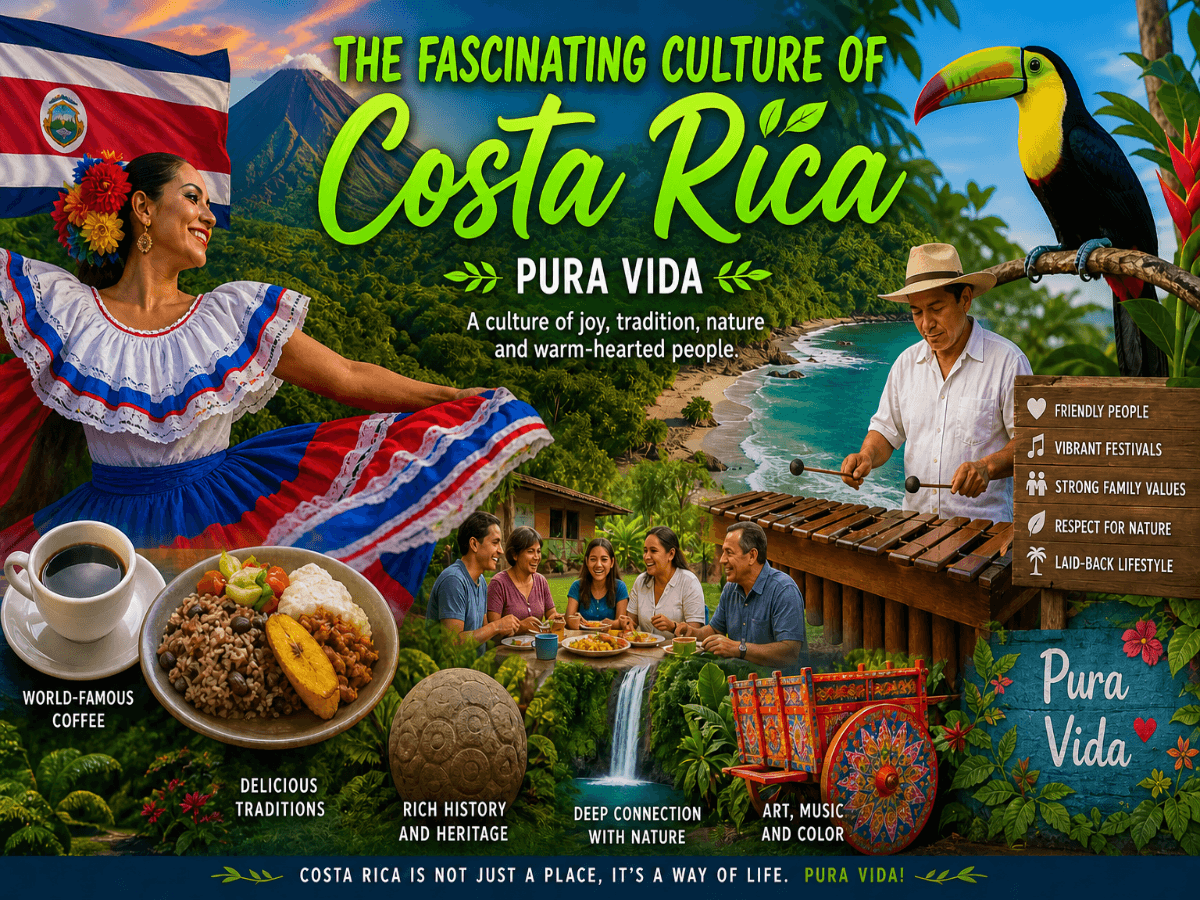
One of the most striking aspects of Costa Rican culture is the famous phrase “Pura Vida.” More than just a saying, it reflects a philosophy of gratitude, optimism, and the enjoyment of life’s simple pleasures. People use it as a greeting, a farewell, or a way to say that everything is going well. This mindset helps create the friendly and relaxed atmosphere for which Costa Ricans—known as Ticos and Ticas—are famous.
This incredible country is a melting pot. Costa Rica’s culture is also shaped by a blend of influences. Indigenous heritage remains important in areas such as crafts, language, and traditions, while Spanish colonial history influenced architecture, religion, and family customs. African-Caribbean culture, especially in Limón, has added vibrant music, dance, cuisine, and language patterns that make the country even more colorful. This cultural mixture gives Costa Rica a unique identity, unlike that of any other country in Latin America.

Family
Family and community play a central role in Costa Rican life. Families often stay close, support one another, and gather regularly for meals and celebrations. Hospitality is deeply rooted in society, and visitors often notice how welcoming and helpful locals can be. Whether in cities like San José or in small rural towns, there is a strong sense of connection among people.
If you want to make friends with Ticos, you’ll have to make an effort. Start by learning the Spanish language. Remember, the local language is Spanish, and it’s a matter of having respect for the locals to at least try to learn the basics. Especially when buying a house here, you should make the effort to adapt to the culture of Costa Rica, don’t you think? I know many expats who have moved here 20 years ago or more and can’t even say “buenos días” or “una cerveza por favor”. How would you react to a Costa Rican who moves to your hometown and addresses you in Spanish? Learn more about making friends in Costa Rica in another article
Traditions
Costa Rican traditions are lively and meaningful. National holidays are celebrated with parades, music, dancing, and traditional costumes. Events such as Día de la Independencia on September 15 showcase patriotism and community spirit. Folk dances, marimba music, and local festivals keep traditions alive while younger generations bring modern creativity into art, fashion, and entertainment.
Some traditions
- Fiestas Patronales – Town celebrations honoring a local patron saint with parades, music, rodeos, and food.
- Día de la Independencia (September 15) – Independence Day with lantern parades and patriotic events.
- Tope Nacional – A famous horse parade held around New Year celebrations.
- Masquerades (Mascaradas) – Giant colorful masks danced through the streets during festivals.
- Coffee Culture – Sharing coffee with family and visitors is an important social tradition.
- Christmas Tamales – Families gather to make tamales together during the holiday season.
- Pura Vida Lifestyle – More than a phrase, it reflects a relaxed, grateful, and positive way of life.
Food
Food is another essential part of the culture. Simple yet flavorful dishes such as Gallo Pinto, casados, fresh tropical fruits, and excellent coffee reflect the country’s agricultural roots. Meals are often social occasions, bringing family and friends together.
Some typical food
- Gallo Pinto – Rice and black beans, usually eaten for breakfast.
- Casado – A plate with rice, beans, salad, plantains, and meat or fish.
- Olla de Carne – A hearty soup with beef and root vegetables.
- Tamal – Corn dough filled with meat and vegetables, wrapped in banana leaves.
- Chifrijo – Rice, beans, pork, pico de gallo, and avocado.
- Arroz con Pollo – Rice cooked with chicken and vegetables.
- Patacones – Crispy fried green plantains, often served with dips.
- Tres Leches Cake – A sweet cake soaked in three kinds of milk.
Nature
Perhaps most fascinating of all is Costa Rica’s relationship with nature. Environmental respect is woven into the culture. National parks, wildlife protection, and sustainable living are sources of pride. Many Costa Ricans grow up appreciating the outdoors, whether through beaches, volcanoes, rainforests, or mountains.
Make sure you visit
- Manuel Antonio National Park – Famous for beaches, monkeys, and easy wildlife viewing.
- Corcovado National Park – One of the most biodiverse places on Earth.
- Arenal Volcano National Park – Volcano views, hot springs, and rainforest trails.
- Tortuguero National Park – Famous for sea turtles and jungle canals.
- Monteverde Cloud Forest Reserve – Misty forests, hanging bridges, and birdwatching.
- Rincón de la Vieja National Park – Volcanoes, mud pots, waterfalls, and hiking.
- Cahuita National Park – Caribbean beaches, coral reef, and relaxed atmosphere.
- Poás Volcano National Park – Massive crater volcano close to the Central Valley.
The culture of Costa Rica is fascinating because it balances joy, tradition, hospitality, and environmental consciousness. It is a place where people value happiness over hurry, relationships over status, and natural beauty over excess. That combination makes Costa Rican culture truly special and admired around the world.
Feel free to comment on this blog and share this article on your social media. Would you like to learn more about buying property in Costa Rica? Then request a Zoom meeting with me now.